
Historical perspective
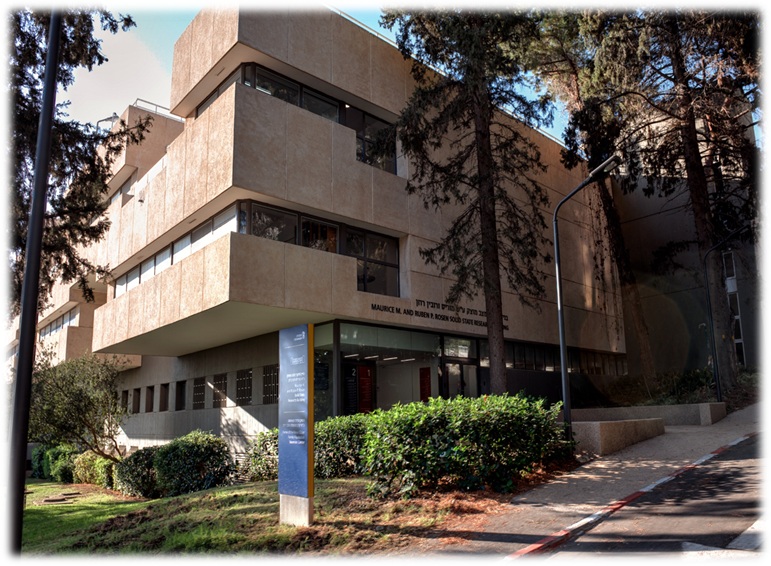
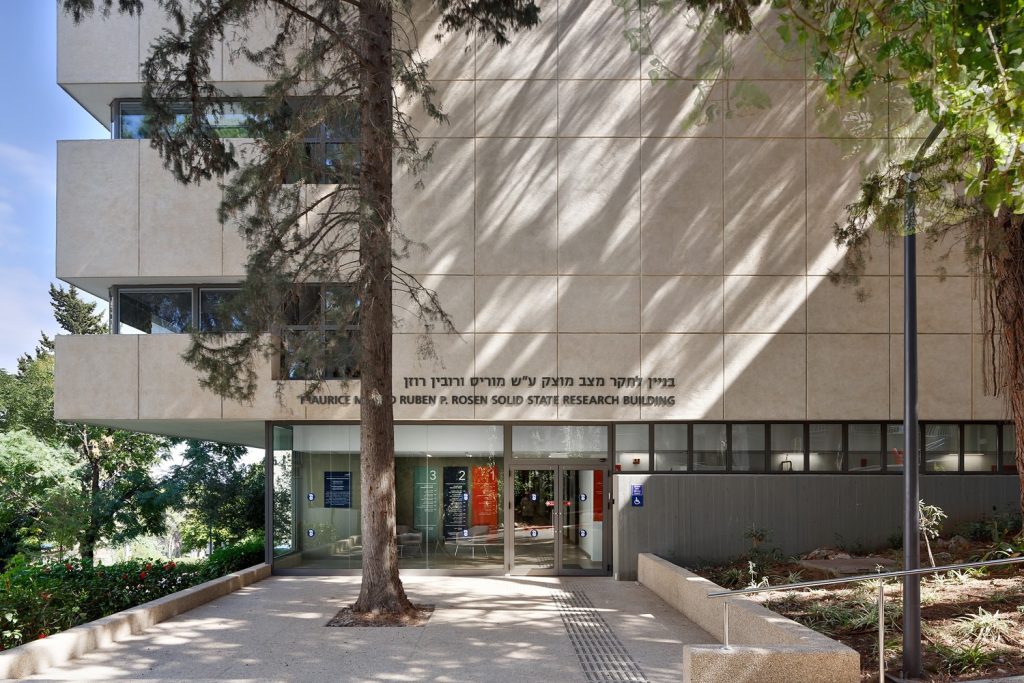
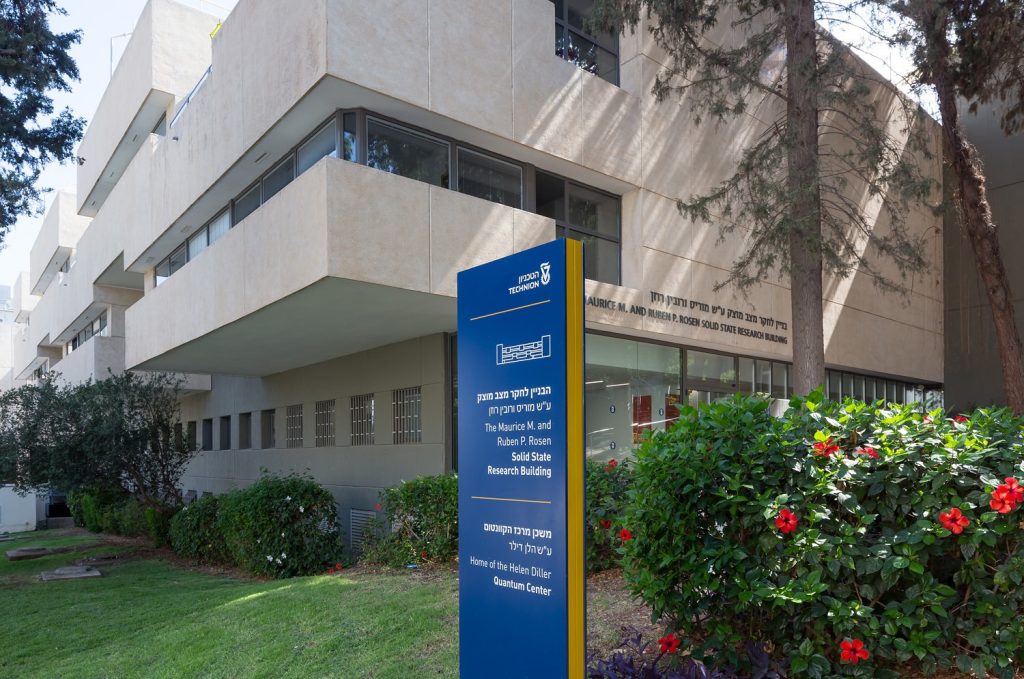
The Solid State Institute at the Technion is a multidisciplinary research center where research groups from the Faculties of Physics, Chemistry, Electrical Engineering and Materials Science & Engineering have been carrying out cutting-edge research since the early 1970s, when, with the help of the Rosen family, the Institute and the Maurice and Ruben Rosen Solid State Building were established. Over the years, the faculty and students of the Solid State Institute have made many groundbreaking discoveries that have contributed greatly to the Israeli security, economy, science and education. The list of these discoveries is exceedingly long, hence we mention here only two.
The first major milestone is the birth of microelectronics R&D in Israel. Today, close to 80% of the design of every laptop computer made by Intel takes place in the Intel Research Center in Haifa; likewise, with several other major players in the microelectronics industry. All this started at the Solid State Institute at the Technion, which was where the first transistors in Israel were made, and where the first generation of engineers and PhDs in microelectronics were educated. Those students were undergraduate students with the Electrical Engineering Department at the Technion, but the faculty members supervising them were all members of the multidisciplinary Solid State Institute, and this is also where the laboratories were and their research was conducted.
The second milestone made at the Solid State Institute was the invention of the Israeli thermal imaging systems. During the 1973 Yom Kippur War, the Syrian tanks (made in the USSR) were equipped with night vision systems, whereas Israel’s attempts to purchase such systems from the US and other NATO countries encountered constant refusal. After the war, in which many young soldiers paid with their lives for the lack of these essential systems (which has put the Israeli tanks at a major disadvantage), the military establishment was desperate to find a research group that could rise up to the challenge and develop these systems in Israel. The late Prof. Yitzhak Kidron, at that time a member of the Solid State Institute and the Technion’s Faculty of Electrical Engineering, stood up to that mission, and within a few years, he developed the first of these systems. By 1982 during the Lebanon War, the Israeli tank brigades in active duty were equipped with these thermal night-vision systems – made in Israel: invented on the 3rd floor of the Solid State Institute, and produced nearby. Today, the Israeli thermal imaging systems are considered among the top three in the world, which has contributed greatly to the security of Israel.
Apart from these two major R&D contributions, both of which took place at the Solid State Institute, there were many more that contributed to the security and economy of Israel, to research and education in Israel, and to the benefit of humankind in general.
Vision and current goals
Vision. The enduring vision of the Solid State Institute is to be the best research division in Israel, and among the best worldwide, by performing the best possible scientific research in specific areas while at the same time giving the best guidance to graduate students in science and technology. The current areas of research conducted in the Institute include semiconductor quantum structures, nano-size quantum dots, nonlinear optics, quantum optics, ultracold atoms, super-resolution imaging and microscopy, ultrafast optics and high harmonics generation, magnetic sensing, transport in mesoscopic systems, quantum and classical effects in diamonds, organic semiconductors, nano-functional materials, superconductivity and ferroelectricity.
Mission. To advance towards the fulfillment of this vision, the mission of Institute is (a) to carry out world class scientific research, (b) to educate graduate students to excel in their future careers as high-tech scientists and engineers as well as faculty members in leading universities.
Goals. The mission leads to the specific current goals of the Solid State Institute, described as follows. (a) Provide the Institute members with the necessary research-oriented environment, the means, and the conditions to carry out world-class research and educate their graduate students in the best possible way. (b) Enhance the multidisciplinary education and research environment for the graduate students, and at the same time provide them with the means and conditions to conduct their research and earn the graduate degree (MSc and/or PhD) they are pursuing.
Success. The success of the Institute can be evaluated both quantitatively and qualitatively. Since 1992, the number of graduate students, both for M.Sc. and Ph.D. degrees that carried out their research in the Solid State Institute is more than 300. Very many of our graduates have become faculty members at universities in Israel and elsewhere, while very many others are holding leading positions in the industry.
Future. In the past few years, the Solid State Institute has become the home of the newly established Technion Helen Diller Center on Quantum Science, Matter and Engineering. This quantum center – the first of its kind in Israel – is uniquely designed to advance the basic sciences while using the principles of quantum mechanics to impact various engineering fields, and to develop applications for a wide range of industries. Research conducted there will be focused on quantum computing and information processing, quantum communications, quantum sensing and detection, quantum simulations, and quantum materials. The Center also will serve as a platform for collaboration between Technion scientists and engineers involved in quantum physics, nanotechnology, materials science, communications, and information theory, and will include researchers from the faculties of electrical engineering, physics, chemistry, materials science & engineering, mechanical engineering, computer science and more. The number of graduate students has increased significantly, and the number of researchers has also grown substantially in recent years. New laboratories are being built at the Institute, and research activities are advancing and expanding.